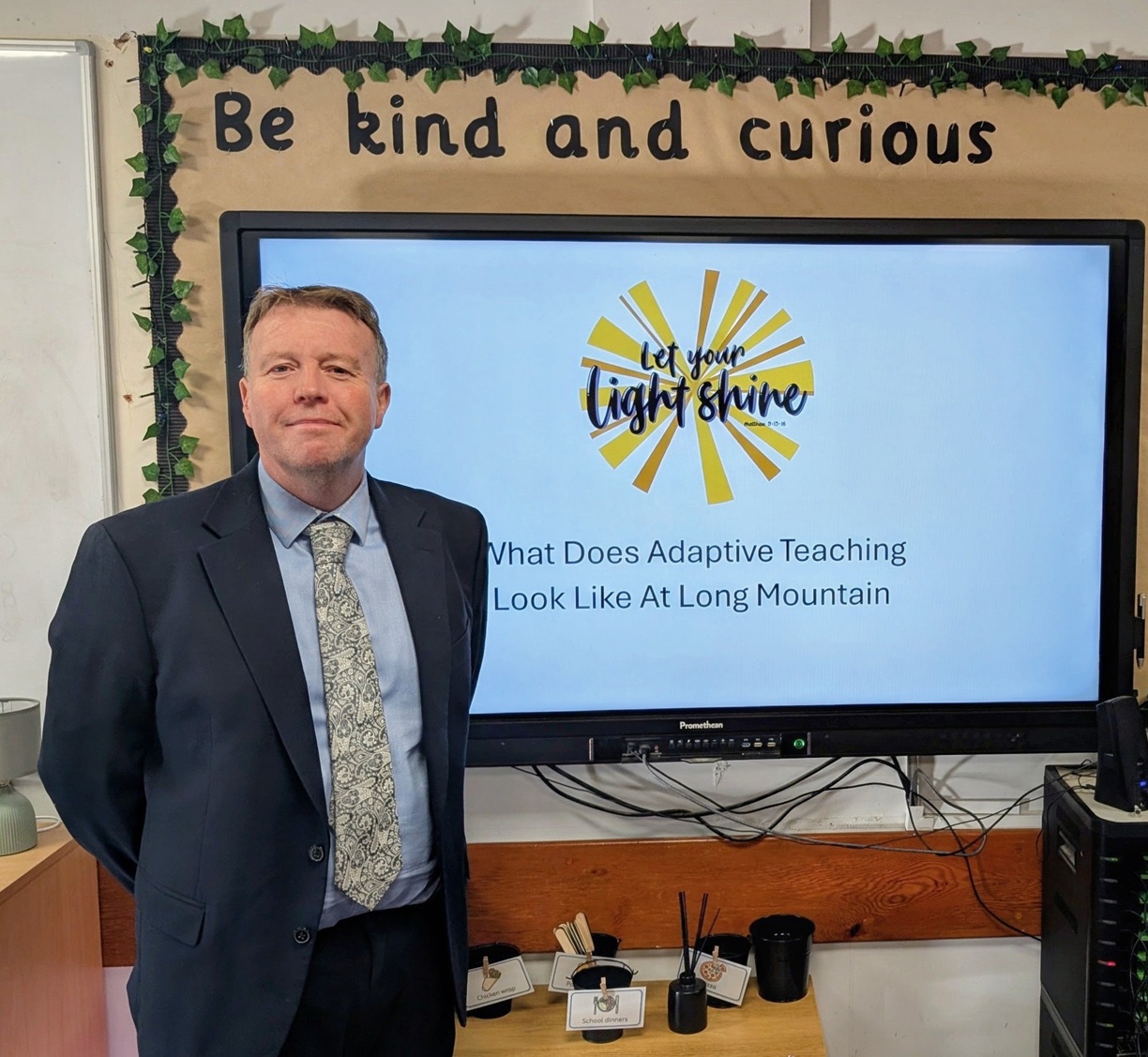
Jon-Anders Rowlands, Headteacher at Long Mountain Church of England Primary School, shares how RISE has helped build stronger leadership, raise expectations and transformed school culture.
When I became headteacher of Long Mountain Church of England Primary School in September 2023, I inherited a school with enormous potential but significant challenges. Formed in 2017 through the amalgamation of three rural Church of England primary schools, it brought together communities with their own traditions, expectations and approaches to teaching and learning.
What was the issue?
Just eight months into my first headship, the school received its second consecutive Ofsted Requires Improvement judgement. Key Stage 2 outcomes were amongst the lowest nationally, staff confidence had been affected by leadership changes, and there was a pressing need for greater consistency in teaching, learning and expectations.
One of the clearest challenges was culture. Staff had seen different leaders introduce different priorities and initiatives, and some had understandably become cautious about change. I quickly recognised that improving outcomes would require more than new systems and processes. It would require a shift in our collective belief about what our pupils could achieve.
A school ready for change
Following the judgement, Long Mountain was selected to receive support through the RISE programme. Initially, this was difficult news. Colleagues had worked incredibly hard and were concerned that RISE would bring additional scrutiny and pressure.
The turning point came when we were partnered with the Shropshire Church of England Academies Trust. Rather than arriving with predetermined solutions, colleagues took time to understand our context, listen to staff and work alongside us. Together, we developed an improvement plan focused on leadership, teaching quality, school culture and pupil outcomes. Crucially, it felt collaborative rather than imposed.
Through coaching, mentoring and regular professional dialogue, I developed greater confidence in leading change, addressing underperformance and having difficult professional conversations. I also gained access to trusted professionals who understand our context and are only a call away when I need advice, challenge or reassurance.
A positive culture change
School improvement is no longer seen as the responsibility of one individual. Subject leaders now play a more active role in monitoring standards and driving improvement, the SENCO is a key member of the leadership team, and staff increasingly share expertise and support one another.
Pupils are benefiting too. Behaviour incidents have reduced, adaptive teaching has strengthened, classroom expectations are more consistent, and outcomes in Early Years and Phonics have improved. Children now experience a more aspirational culture where adults believe in their potential.
Five lessons from our improvement journey
- Start with your context. Make sure support reflects your pupils, staff and community.
- Build trust before changing systems. Listen to staff and recognise the work already underway.
- Agree a small number of priorities. Keep everyone focused on what matters most.
- Develop leadership at every level. Give subject and pastoral leaders ownership of improvement.
- Use external support as a partnership. Welcome constructive challenge but work together on solutions.
Demonstrating improvement
Our experience shows how RISE school improvement support can bring schools and experienced partners together to create and deliver a focused plan. For us, the combination of partnership, professional challenge and practical support has strengthened leadership and built capacity for sustained improvement.
We are not at the end of our journey, but we are no longer wondering whether improvement is possible. We are demonstrating that it is happening. The greatest lesson has been that school improvement is fundamentally about people: building trust, developing confidence, raising expectations and creating a shared commitment to children.
Leave a comment