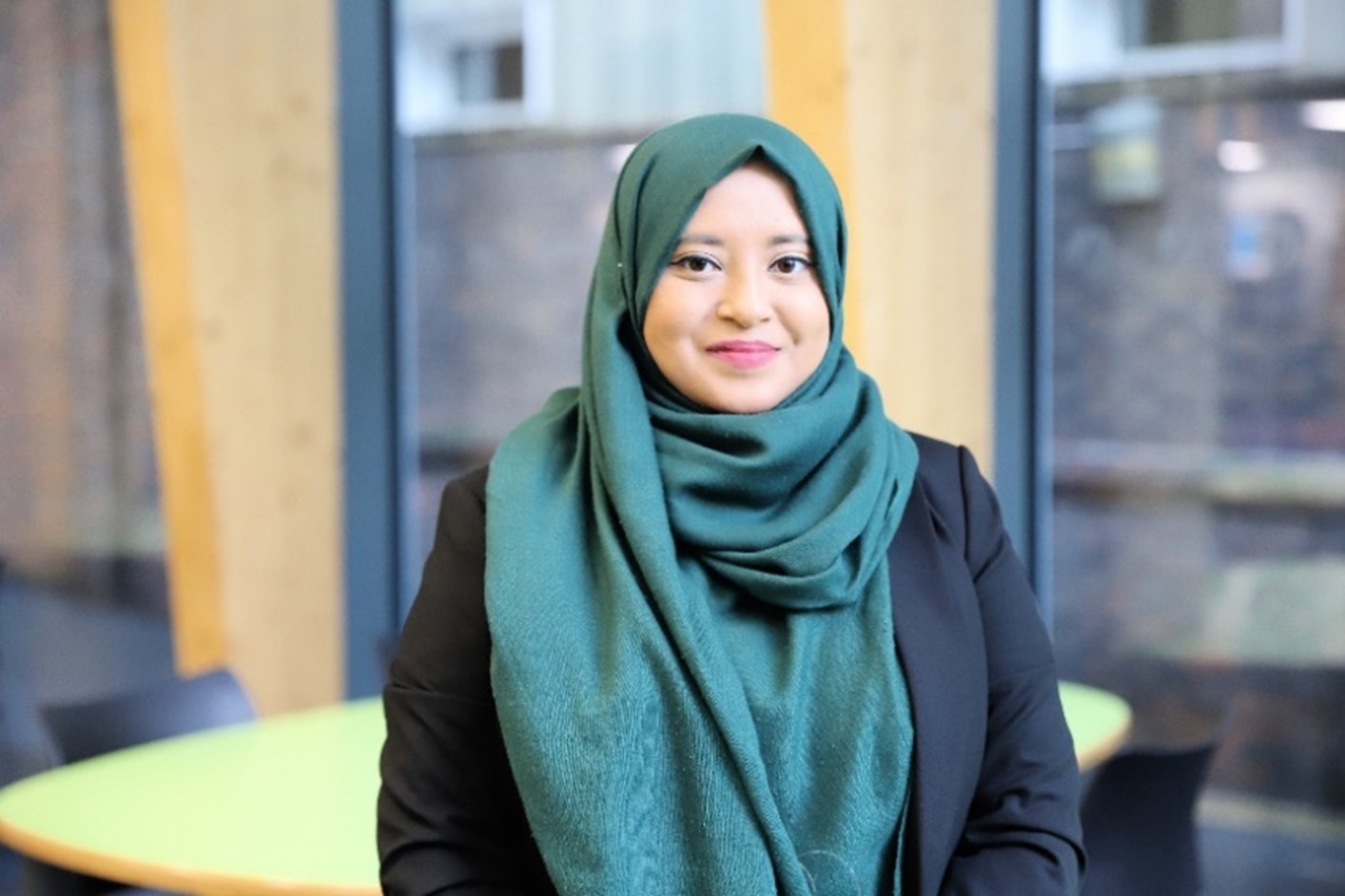
Our education system is strongest when every teacher, leader and student can see themselves represented — and can thrive. This series shares the lived experiences of teachers and leaders from underrepresented groups across schools and further education. Their stories are motivating and deeply human: they celebrate successes, confront challenges, and offer practical insight drawn from real journeys through the profession.
By amplifying these voices, we aim to inspire those already working in education, support the sharing of meaningful best practice, and encourage others to join a profession that needs — and values — them. The DfE is committed to building a diverse, representative workforce where everyone belongs. These case studies show what that can look like in action.
A legacy of learning
I’ve always wanted to teach. Combining my ambition to teach with my love of books, I completed my PGCE at the Institute of Teaching—a year I still call the best of my life, career-wise. I felt empowered and inspired by the dedicated teachers I met.
Navigating identity and discrimination
As the only South Asian teacher in my school wearing a hijab, I faced discrimination—particularly from parents. But instead of retreating, I embraced the power of visibility and turned adversity into advocacy. I used literature and conversation to challenge stereotypes and reshape perceptions.
My impact was profound. A looked-after child reached out 15 years later to say, “You changed my life.” Another student confided in me that he was gay—the first person he’d ever told. My power is in the relationships I build. The power of conversation—that is my power.
Representation and role models
Returning to the community where I grew up, I became the role model I never had. As a student, I didn’t see teachers who looked like me—and that absence shaped my mission. There’s so much power in seeing someone who looks like you. It creates belonging, understanding, empathy—a safe space.
I remember experiencing Islamophobia in school and keeping my pain to myself, scared my feelings would be dismissed. Now, I make sure no child feels that isolation. I’ve become the leader I needed when I was younger—someone warm and empathetic, with an open classroom where everyone feels safe to be vulnerable.
Representation benefits everyone—not just those who share protected characteristics. By having a representative workforce, you’re saying to all young people and staff: you belong.
Leadership and systemic change
A pivotal moment came when I worked with Tamina Begum—the first hijabi headteacher I’d ever seen. Seeing her made me aspire to be a headteacher. She’s a legend to me.
But I noticed a troubling pattern: diverse staff were often confined to pastoral roles, rarely advancing beyond middle leadership. In December 2024, after 15 years in the classroom—including time as a deputy headteacher—I took a bold step toward systemic change. I want to dismantle barriers, not just break glass ceilings but drill through concrete.
Advocacy and making impact nationally
Today, I’m busier than ever. In addition to working as a freelance consultant and coach, I serve as an Education Project specialist at the Chiltern Learning Trust. I co-founded the South Asian Educators Network, I’m a Belonging Effect Associate and a Network Leader for WomenEd. I’m also the author of Sage’s ‘A Little Guide for Teachers: Thriving in Your First Years of Teaching’.
Currently, I lead a four-year national initiative funded by Mission44, in partnership with Being Luminary, The Chartered College of Teaching and Chiltern Learning Trust. The goal is to address structural barriers in Initial Teacher Training and increase representation of ethnically diverse teachers in the profession.
We need systems that help dismantle barriers. Equity should be treated like safeguarding—it’s everyone’s responsibility.
This project has three strands:
- School-Based ITT –Diversity, Equality and Inclusivity experts who are Fellows of Chartered College of Teaching provide personalised coaching for SCITTs to help them identify and remove barriers faced by global majority trainees including issues in recruitment, retention on ITT courses and QTS assessment
- Online Racial Literacy Course – Developed with experts and aimed at educators working in initial teacher training, this course explores the systemic barriers faced by trainee teachers from global majority backgrounds when applying for and completing teacher training, and provides language, tools and frameworks for embedding equity in teacher training
- Chartered Teacher Status – Funded places for global majority teachers and leaders to learn alongside a supportive community of peers to become Chartered Teachers in order to enhance retention and progress in teacher education.
Appreciating diversity in the curriculum
I’m passionate about curriculum reform. English literature isn’t just English—it’s world literature. Education should reflect different worldviews. I champion initiatives like the Black Curriculum, helping students see themselves in the content they study and appreciate the richness of diverse experiences.
Looking ahead
Though I miss the classroom and the direct impact on students, my ambition is clear: I want to continue shaping inclusive, equitable education and one day become a headteacher. I love teaching and school leadership. But right now, I want to have an impact on the system and its structures.
My journey is a testament to the power of representation, resilience and relational leadership. Education isn’t just about knowledge—it’s about identity, safety and belonging. If we truly want a diverse workforce, we must build environments where every educator feels safe, seen and supported. Because when we dismantle barriers, we don’t just change schools—we change lives.
The Department for Education is committed to making teaching an inclusive profession that attracts talented individuals from all backgrounds. Our in-house digital services, through extensive testing, have been designed to support all candidates through the recruitment process for initial teacher training (ITT). In addition, diversity information, such as sex, disability and health conditions, and ethnicity, are currently anonymised during the recruitment process, until an offer has been made and accepted. Our digital services also allow us to access real-time recruitment data, giving us greater insight into candidates’ behaviour and the behaviour of providers of teacher training. Using this data, we can make evidence-led improvements to the recruitment process, to ensure candidates from all backgrounds are given the opportunity and support to apply for teacher training.
One example of this work is the launch of ‘Find a Candidate’ within the Apply for teacher training digital service. This feature allows providers to view a fully anonymised list of candidates who have not yet received an offer but may have the potential to do so. We will be monitoring our data closely to assess the efficacy of this intervention, but early insights suggest that it is supporting candidates to secure ITT offers, who would have previously dropped out of the process.
------
Read related stories from further education educators — visit the dedicated resource hub.
Leave a comment