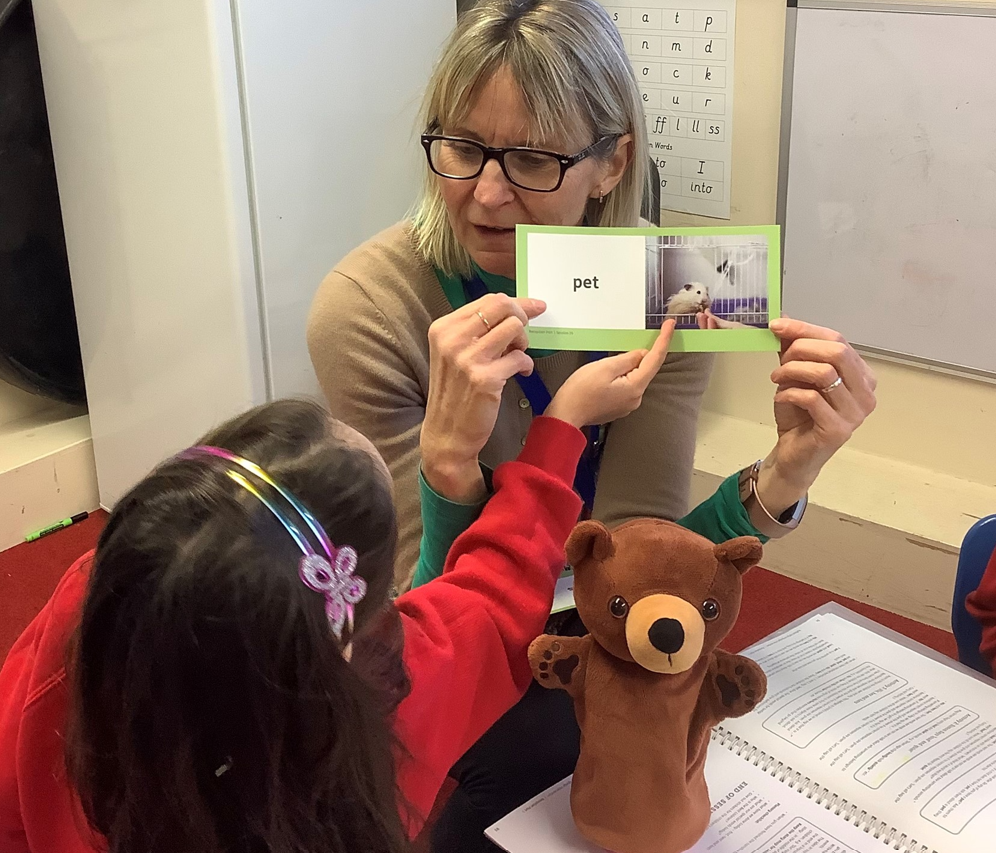
I am an Early Years Reception Teaching Assistant at Henleaze Infants School in Bristol. I've been delivering Nuffield Early Language Intervention (NELI) programme at Henleaze Infants School since September 2021, and it's genuinely one of the most rewarding parts of my role. NELI is a 20-week programme that helps children aged 4 to 5 who need a bit of extra support with their spoken language skills, delivered through small group and one-to-one sessions by a trained teaching assistant or early years educator. When we first started, I wasn't sure how easily it would fit into the school day. But it's become something I look forward to, and more importantly, so do the children.
Identifying children who need support
We start each year by using LanguageScreen to assess all our Reception children. It's a really useful tool—it picks up things you might otherwise miss, like children who seem confident speakers but are actually struggling with reasoning or comprehension. From that assessment, I typically identify four to six children who would benefit most. It slots into our timetable more easily than I expected, and once you're up and running it feels like a natural part of the week.
What the sessions look like in practice
The sessions are a highlight of the week for the children involved. They love coming out of class and quickly form bonds with children from other groups they wouldn't normally mix with. I've noticed real improvements in their attention and listening, and that carries back into the classroom—better turn-taking, more confident hand-raising, and stronger engagement during circle time. My class teacher has noticed the difference too — children come back more settled, more willing to contribute, and quicker to pick up new vocabulary across different subjects.
The difference for EAL learners
The individual sessions have been particularly powerful for EAL learners. One child joined us with no English at all and, within months, was speaking in full sentences. Those are the moments that remind you why you do this job. Catching these gaps in Reception, before children fall further behind, makes a real difference to where they end up.
Measurable results that go beyond the numbers
Children who completed the programme improved their LanguageScreen scores by an average of 16.5 points, compared to 5.5 points for those who didn't take part. But what I find just as compelling is seeing vocabulary transfer into wider learning—children recognising words like "ankle" in PE or "border" in geography that they'd first encountered in our sessions. That's when you know it's really sticking.
If you're thinking about trying this in your school, I'd really encourage you to go for it. It's manageable alongside everything else you're juggling, the children take to it quickly, and the difference it makes is visible.
Find out more
If you're a school senior leader, the programme is straightforward to implement. It requires a trained teaching assistant or early years educator and fits into the existing school timetable without significant disruption. The programme is funded by the Department for Education and is available to all state-funded primary schools in England with a Reception class. For more information, visit the programme website.
Recent Comments